A Stage in 48 Hours: How Crews Build a Festival Site for Tens of Thousands
On Thursday morning the field is empty grass. By Saturday night, tens of thousands of people are facing a lit stage, a wall of speakers and giant screens. Building a festival stage in 48 hours sounds almost impossible, yet for many city events it’s standard practice. The secret isn’t speed alone, but months of planning squeezed into two very long days.
Planning Comes Long Before the Trucks
A fast festival stage build only works because the hard thinking happened earlier. Industry guides suggest main stage design should start eight to twelve months before the event, leaving time for structural calculations and wind load analysis. By the time trucks arrive, every post position is already marked on the ground. Festival weekends also drive traffic across the wider digital entertainment world, from ticketing and streaming apps to services such as https://parimatch.com/en/crypto-casino, which shows how live events and online platforms now run side by side. On site, though, the only thing that matters is the schedule.
The Mobile Stage Revolution
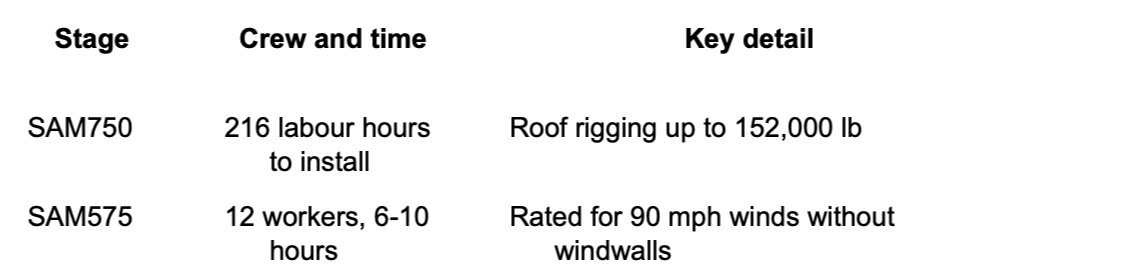
Much of the speed comes from mobile stages, which fold an entire stage into road-legal trailers. Quebec-based Stageline is one of the best-known makers. When its giant SAM750 was installed at New York’s MetLife Stadium in 2017, it took 216 labour hours, compared with more than 2,400 hours for similar structures in earlier years. After the show, a team of 18 took it down in just 12 hours.
Stage
Crew and time
Key detail
SAM750
216 labour hours to install
Roof rigging up to 152,000 lb
SAM575
12 workers, 6-10 hours
Rated for 90 mph winds without windwalls
Did you know? Glastonbury works on a different scale. Preparations start almost two months before the gates open, and parts of the famous Pyramid Stage reportedly serve as a cow shed for the rest of the year.
How the 48 Hours Usually Break Down
A typical two-day build follows a strict sequence:
Day 1, morning: ground marking, deliveries of decking, roof and ballast.
Day 1, afternoon: stage deck assembly and roof lift, with other crews kept clear of the zone.
Day 1, evening: structural checks and wind rating confirmation.
Day 2, morning: lighting, sound and LED screens rigged to the roof.
Day 2, afternoon: power hook-up, line checks and soundcheck.
Each step depends on the one before it. If the roof goes up late, lighting crews can’t hang a single fixture, so organisers build buffer time into every stage of the plan.
Safety Is Non-Negotiable
Speed never replaces safety. Mobile stages are engineered and certified for specific wind speeds and load limits, and many large events keep a stage safety officer on duty throughout the festival. If the wind picks up beyond the rated limit, shows are paused, no matter how many people are waiting.
Weather is the biggest wildcard. Crews check forecasts several times a day during the build, and roof covers or side walls may be removed if strong gusts are expected, since solid panels act like sails and add extra load to the structure.
When the last encore ends, the clock starts again. The same crews that raised the stage in two days often clear the field overnight, leaving almost no sign that a small temporary city ever stood there.